
A KPI (Key Performance Indicator) is a measurable value that demonstrates how effectively a company is achieving its key business objectives. Organizations use KPIs at various levels to evaluate their success in reaching targeted goals.
High-level KPIs may focus on the overall performance of the business, while low-level KPIs may concentrate on the activities of specific departments such as support, marketing, sales, and others.
What makes a KPI effective?
Now that we know KPI stands for Key Performance Indicator, we should also understand its practical value. In many cases, organizations blindly adopt the commonly used KPIs of their industry and then wonder why they have no impact on their business and why no positive changes appear.
One of the most important aspects that is often overlooked is that KPIs are a form of communication. As such, they follow the same rules of communication but work best when communicated effectively. Clear and relevant information is far more likely to have an impact.
Your team should start with the fundamentals when developing a strategy for shaping KPIs: understand your organization’s goals, know how you plan to achieve them, and identify who can take action based on this information.
This should be an iterative process that involves feedback from business analysts, department managers, and executives. As this mission is put into action, you will gain a better understanding of business processes, the KPI measurement indicators, and the individuals with whom this information should be shared.
4 Steps to Defining a KPI
Step 1: Define Key Objectives
In the first step, we need to identify our business objectives. These goals may include increasing revenue, boosting sales, expanding market share, gaining more clicks, increasing followers, and so on. To set proper goals and define relevant Key Performance Indicators (KPIs), models such as the SMART model can be used, which will be discussed further below.
Step 2: Define Success
Now that you have identified your strategic objectives, you should think about how each goal can be achieved and what success looks like. When defining your success KPIs, you will often find that achieving your goals and defining success involves several interconnected components.
Step 3: Determine How to Measure Key Performance Indicators
In the next step, you need to decide how to measure success. Typically, KPIs are represented as rates, ratios, percentages, or averages. KPIs should be viewed as quantifiable metrics that allow precise measurement, showing how successful you have been in achieving results and how your performance can be evaluated.
The evaluation and measurement of each KPI can be carried out periodically on a weekly or monthly basis. You can use various platforms and tools to track and measure your KPIs effectively.
Step 4: Write the KPI
Finally, it’s time to actually start writing your KPIs. At this stage, you should define your KPIs based on the identified success factors. KPIs must be clear and understandable to everyone within the organization.
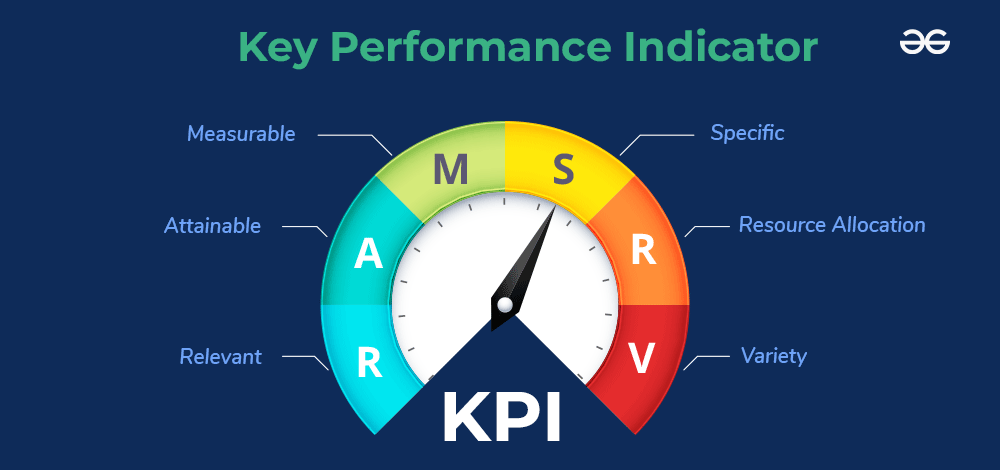
Key Performance Indicators (KPIs) are measurable metrics that are defined through four steps and help you understand how close you are to achieving your goals. KPIs mainly focus on business performance across different areas and, based on goals and success factors, determine the extent of your achievements.
The KPI process varies across industries and organizations; moreover, it is often a trial-and-error process that requires repetition and practice to develop a proper understanding of how to define effective KPIs for your business.